


Ideal Padel Court Size for Construction in Serbia: Dimensions, Area & Space Planning Guide
If you’re planning to build a padel court in Serbia, one of the most critical decisions is choosing the right size.
Padel’s popularity is booming across Europe, including Serbia, where demand for professional and recreational facilities is rising.
Whether you’re constructing a single court for a local club, a multi-court complex for commercial use, or a recreational court for private use, understanding standard dimensions, total area requirements, and Serbia-specific space considerations ensures compliance with international standards, optimal gameplay, and long-term value.
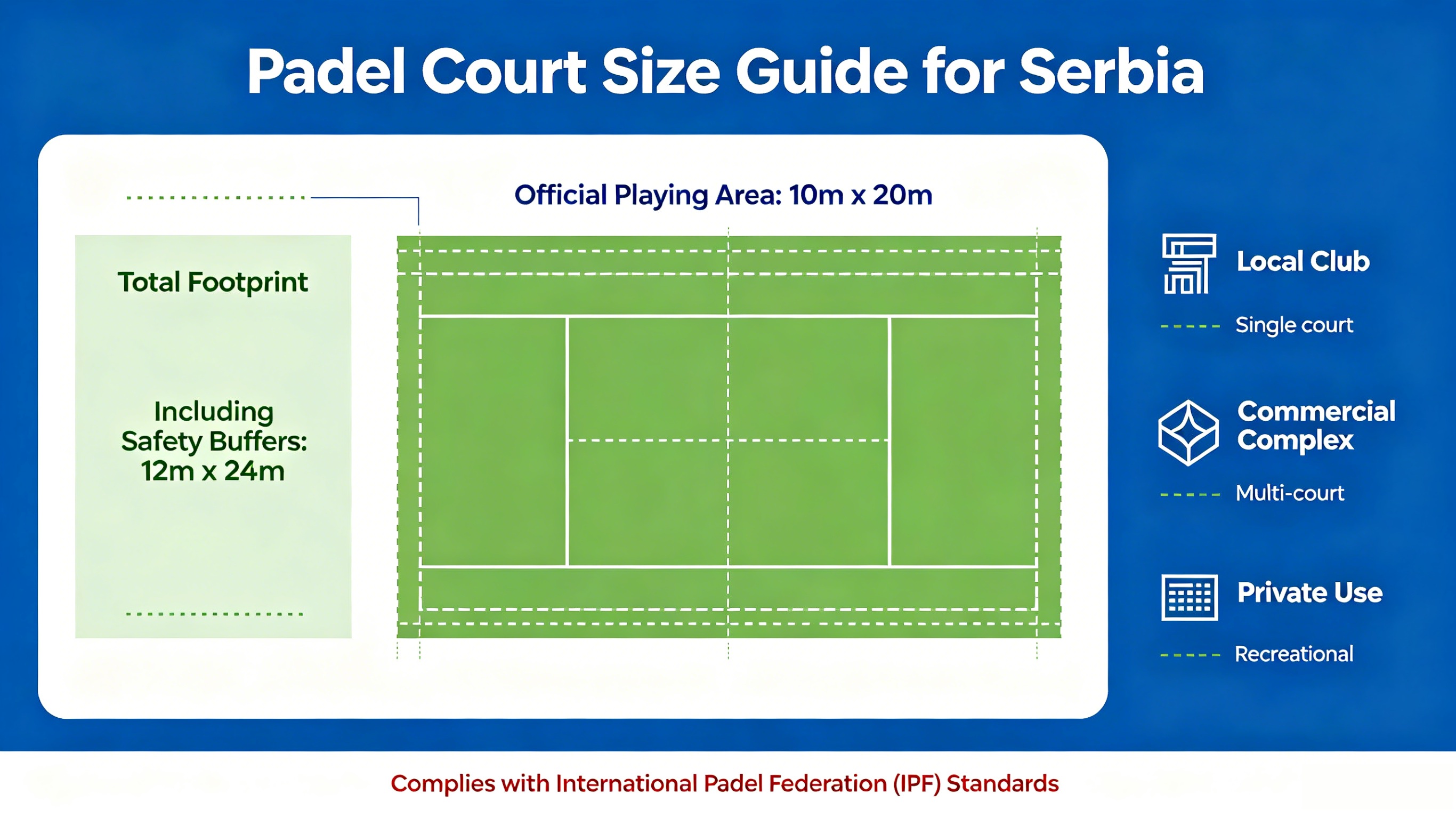
This guide breaks down everything you need to know about padel court size for Serbia, from official playing dimensions to total footprint including safety buffers.
Standard Padel Court Dimensions: FIP-Approved Size for Serbia
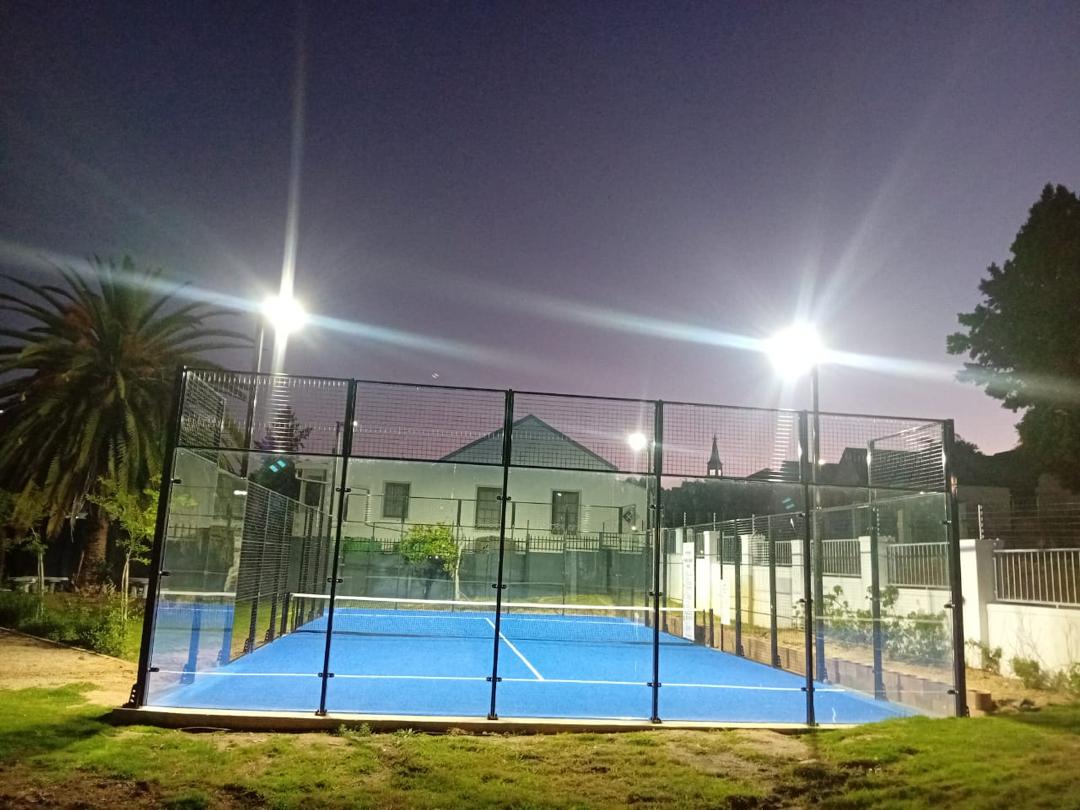
The International Padel Federation (FIP) sets global standards for padel courts, and these dimensions apply to all professional, tournament-grade, and most recreational courts in Serbia. Adhering to FIP rules is critical if you plan to host local, regional, or international tournaments in Serbia, as non-standard courts are not approved for official competitions.
Official Playing Area Dimensions
- Length: 20 meters (65.6 feet) – measured from the inner faces of the front and back walls
- Width: 10 meters (32.8 feet) – measured from the inner faces of the side walls
- Total Playing Area: 200 square meters (2,153 square feet)
- Tolerance: ±0.5% (max deviation: 0.10m in length, 0.05m in width) – strict compliance ensures consistent ball bounce and fair gameplay
This 20m × 10m size is the global standard for doubles padel (the most popular format in Serbia and worldwide). It’s roughly one-third the size of a tennis court, making padel more accessible for players of all ages and skill levels.
Key Internal Markings (Relevant for Size Planning)
While not part of the total area, these markings are integral to court layout and must be factored into design:
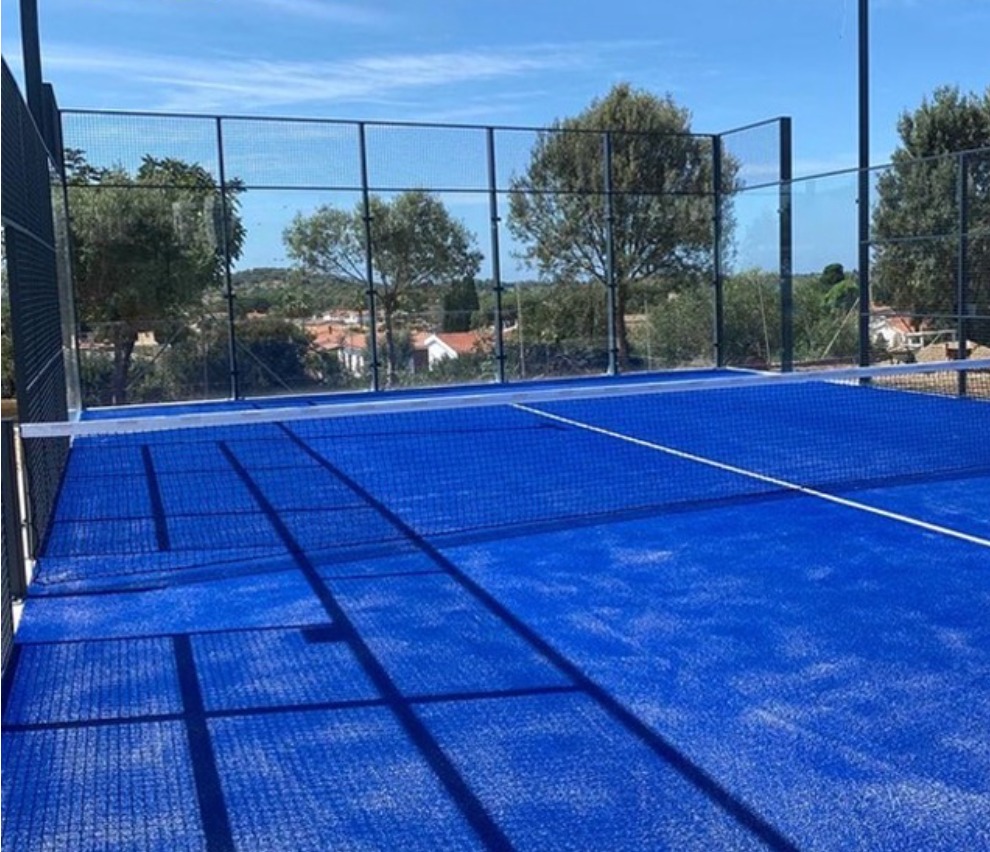
- Net: 10m wide (spans the full court width), 0.88m high at the center, 0.92m high at the posts
- Service Lines: 6.95m from the net (on both sides), dividing the court into service and baseline zones
- Center Service Line: Extends 20cm beyond the service line, splitting each service box into two equal parts
- Line Width: 5cm (all markings) – high-contrast white or black lines recommended for visibility
Total Area Requirements for a Padel Court in Serbia (Including Buffers)
A common mistake when planning padel courts in Serbia is only calculating the 200m² playing area. Safety perimeters, wall structures, access walkways, and spectator zones add significant space requirements, and these are non-negotiable for player safety and facility functionality.
Minimum Total Footprint (Single Court)
For a standard FIP-compliant court in Serbia, including essential safety buffers:
- External Dimensions: 24m × 14m
- Total Area: 336 square meters
This includes:
- 20m × 10m (200m²) playing area
- 2m safety buffer on all sides (critical for player movement, wall access, and accident prevention)
- Space for wall foundations and structural supports
Recommended Total Footprint (Commercial/Club Use in Serbia)
For facilities in Serbia aiming for professional quality (tournament hosting, high player volume, and spectator comfort), upgrade to:
- External Dimensions: 26m × 16m
- Total Area: 416 square meters
Additional space includes:
- Expanded 3m safety buffers on the back and sides
- 2–3m wide spectator walkways (popular in Serbian clubs for social viewing)
- Small equipment storage or player bench areas
Multi-Court Complex Size (Serbia Commercial Projects)
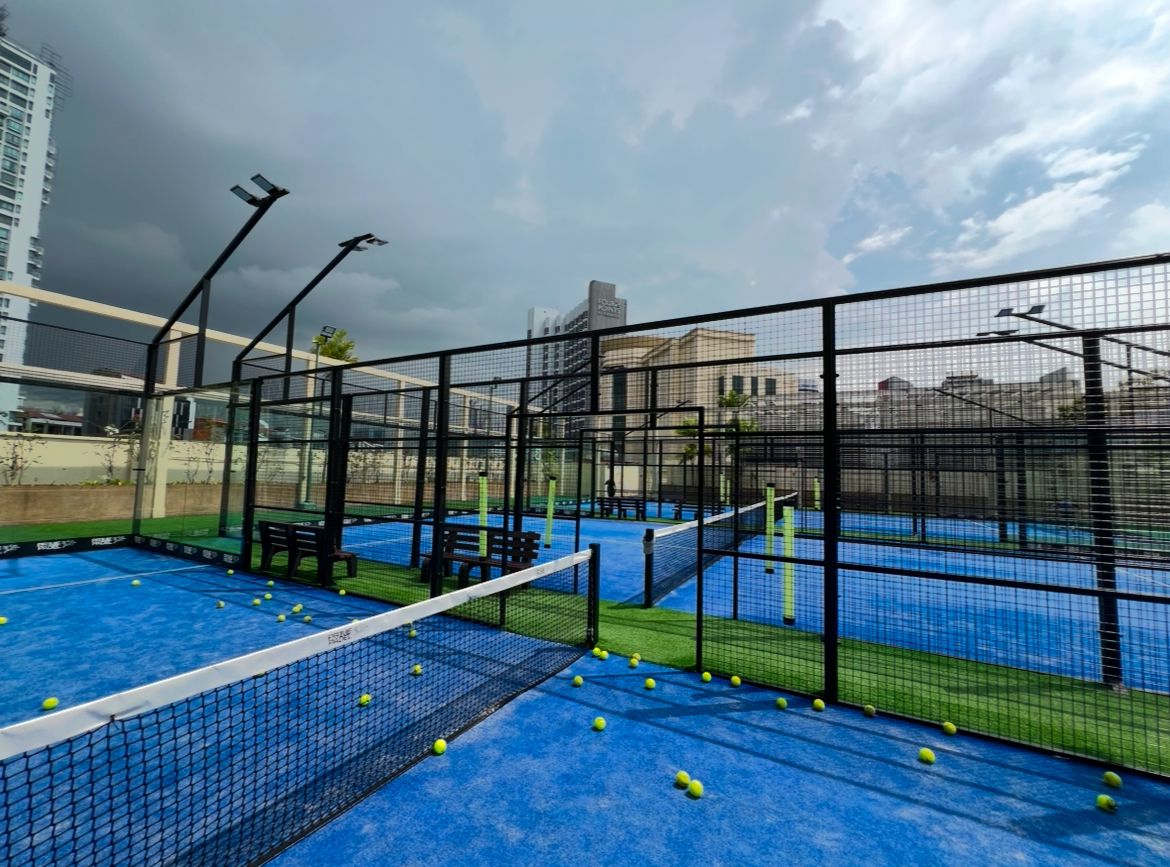
If building multiple courts (common in Serbian urban areas like Belgrade, Novi Sad, or Niš), optimize space by sharing safety buffers between adjacent courts:
- 4-Court Facility: Minimum 1,000 square meters (includes shared walkways, access roads, and small amenities)
- 6-Court Facility: 1,500–1,800 square meters (ideal for large Serbian sports clubs or commercial centers)
Recreational vs. Professional Court Sizes for Serbia
Not all padel courts in Serbia need to be full FIP-compliant. Recreational courts (for private homes, small villages, or casual play) can use smaller dimensions, but there are tradeoffs for gameplay quality.
1. Professional/Tournament Court (Recommended for Most Serbian Facilities)
- Dimensions: 20m × 10m (200m² playing area)
- Best For: Clubs, sports centers, and any facility hosting official matches (local Serbian leagues, European tournaments)
- Pros: FIP-approved, consistent gameplay, higher resale value, attracts competitive players
- Cons: Larger space requirement, slightly higher construction cost
2. Recreational Court (Private Use/Small Serbian Villages)
- Dimensions: 16m × 8m (128m² playing area)
- Best For: Private homes, rural Serbian communities, or casual play only
- Pros: Saves space (36% smaller than standard), lower cost, easier to fit in small lots
- Cons: Not FIP-approved, faster rallies, limited suitability for competitive play
3. Singles Padel Court (Niche Use in Serbia)
- Dimensions: 20m × 6m (120m² playing area)
- Best For: Training facilities, advanced players, or small Serbian clubs with limited space
- Pros: Space-efficient, ideal for solo practice or 1v1 matches
- Cons: Less popular in Serbia (doubles dominate), not standard for tournaments
Serbia-Specific Factors to Consider for Padel Court Size
When choosing a padel court size in Serbia, local climate, land availability, and player preferences play key roles:
1. Climate & Weather Resilience
Serbia has hot summers (up to 38°C) and cold winters (down to -10°C). Larger courts with expanded buffers (26m × 16m) allow for better drainage, snow removal access, and shade structure installation (critical for summer play in Serbia).
2. Land Availability (Urban vs. Rural Serbia)
- Urban Areas (Belgrade, Novi Sad): Land is limited and expensive. Opt for the minimum 24m × 14m footprint (336m²) or compact recreational courts (16m × 8m).
- Rural Areas (Vojvodina, Šumadija): More affordable land. Invest in the recommended 26m × 16m size (416m²) for future expansion and tournament hosting potential.
3. Player Demand in Serbia
Padel in Serbia is dominated by doubles play (95% of local matches). Prioritize standard 20m × 10m courts over singles or recreational sizes to align with local player preferences.
4. Local Building Regulations
Serbian construction codes require minimum safety distances for sports facilities. The 2m buffer rule aligns with most local regulations, but always confirm with your municipal building department (e.g., Belgrade’s Urban Planning Institute) before finalizing dimensions.
Final Recommendations for Padel Court Size in Serbia
To summarize, here are the best size recommendations based on your project type in Serbia:
- Professional/Club Court (Most Popular): 20m × 10m playing area, 24m × 14m total footprint (336m²). FIP-compliant, safe, and ideal for Serbian clubs and tournaments.
- Commercial/High-End Facility: 20m × 10m playing area, 26m × 16m total footprint (416m²). Extra space for spectators, amenities, and climate resilience.
- Recreational/Private Court: 16m × 8m playing area, 20m × 12m total footprint (240m²). Space-saving and cost-effective for casual play in Serbia.
- Multi-Court Complex: 1,000m² for 4 courts, 1,500–1,800m² for 6 courts. Optimized for Serbian urban and rural commercial projects.
Conclusion
Building a padel court in Serbia starts with choosing the right size, balancing international standards, local needs, and space constraints.
The standard 20m × 10m FIP-compliant court (with a 24m × 14m total footprint) is the gold standard for most Serbian facilities, offering versatility, safety, and alignment with global and local player demands. For private or rural projects, smaller recreational courts work well, but always prioritize FIP compliance if you aim to host tournaments or attract competitive players.
As padel continues to grow in Serbia, investing in the right size today ensures your facility remains relevant, valuable, and enjoyable for players for years to come.