Where to Build a Padel Court in Serbia: Best Locations for Maximum ROI
Padel is Serbia’s fastest-growing sport, with player demand surging by 5,900% since 2020 and existing clubs in Belgrade, Novi Sad, and Niš hitting 80–95% occupancy during peak months. For investors, choosing the right location is the single most critical decision—it directly impacts foot traffic, pricing power, operational costs, and long-term profitability.
This guide breaks down the best cities, neighborhoods, and key site selection factors to help you pick the perfect spot for your padel court in Serbia.
Why Location Matters for Padel Success in Serbia
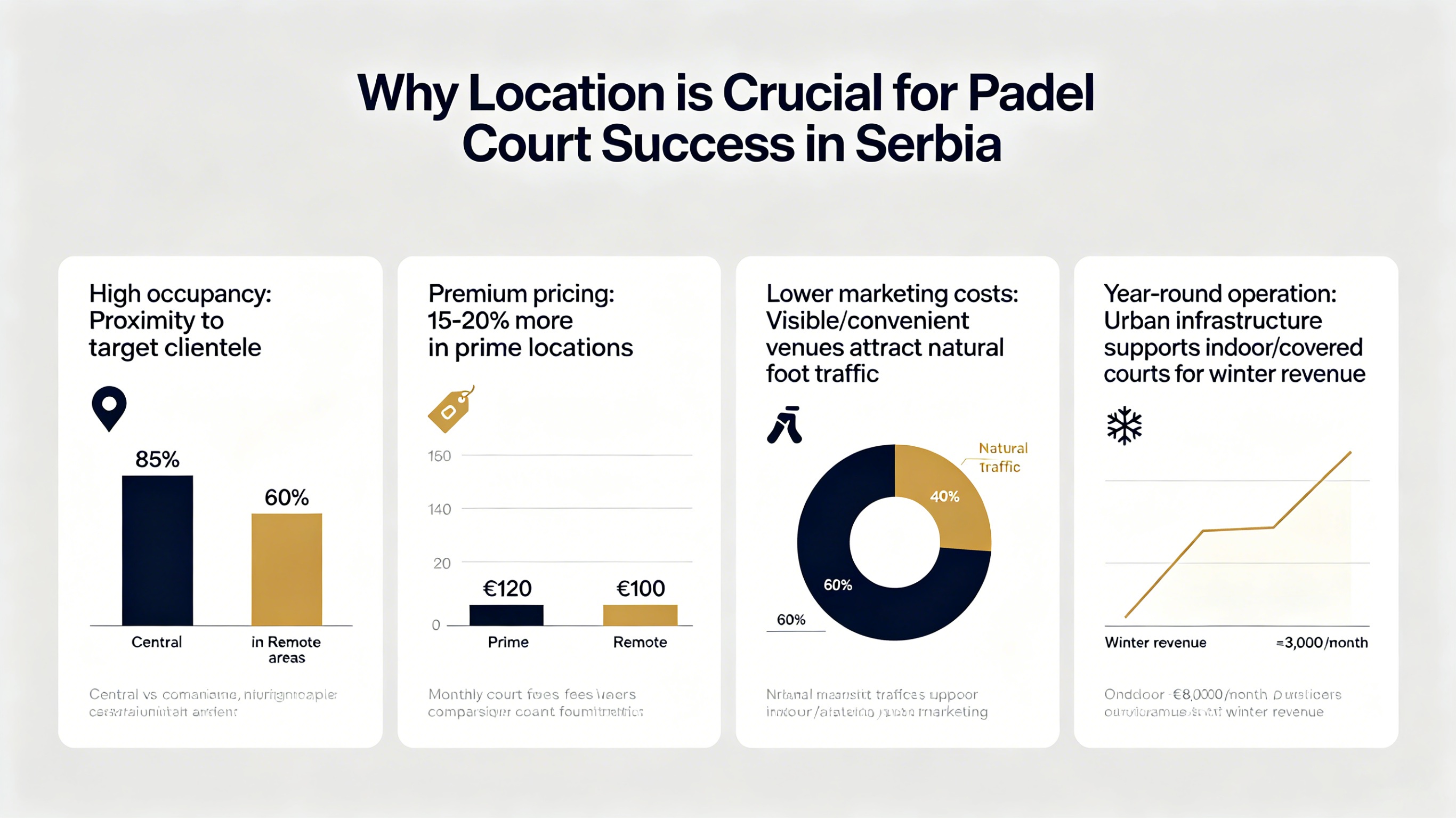
Serbia’s padel boom is concentrated in urban hubs, where young professionals, families, and sports enthusiasts drive consistent demand. A prime location ensures:
- High occupancy: Proximity to target audiences cuts empty court time (the biggest revenue killer).
- Premium pricing: Desirable areas let you charge 15–20% more than remote locations.
- Lower marketing costs: Visible, accessible sites attract walk-ins and organic bookings.
- Year-round play: Urban areas with better infrastructure support indoor/covered courts for winter revenue.
Top Cities for Padel Court Investment in Serbia
1. Belgrade: The Undisputed Padel Capital
Belgrade leads Serbia’s padel growth, with the highest player density, disposable income, and sports culture. It’s home to top clubs like Padel Center (Belgrade Waterfront) and Prime Padel Club (Kalemegdan), both operating at full capacity.
Best Neighborhoods in Belgrade:
- Belgrade Waterfront: Prime urban location near the Sava River, with high foot traffic, luxury residential buildings, and corporate offices. Ideal for premium indoor/outdoor courts; hosts national/international tournaments.
- Košutnjak & Ada Ciganlija: Green, recreational zones with parkland, running trails, and family-friendly amenities. Perfect for outdoor courts targeting casual players and families; lower land costs than the city center.
- Novi Beograd: Business district with modern office parks, residential towers, and excellent transport links. High demand for after-work play; ample parking for commuters.
- Price Range: Land/lease costs are the highest in Serbia, but rental rates (€32–€50/hour peak) justify the investment.
2. Novi Sad: Fast-Growing Second City
Novi Sad is Serbia’s cultural and student hub, with a young population and rapidly rising padel interest. It’s less saturated than Belgrade, making it ideal for first-time investors.
Best Neighborhoods in Novi Sad:
- City Center & Petrovaradin: Near the Danube River, with tourist traffic, cafes, and residential areas. Great for mixed-use facilities (courts + café) targeting locals and visitors.
- University Campus Area: High student population (flexible daytime schedules) ensures strong off-peak occupancy. Lower pricing (€20–€30/hour off-peak) drives volume.
- Residential Suburbs (e.g., Detelinara): Spacious, affordable land for multi-court complexes with parking and amenities.
- Price Range: 30–40% cheaper than Belgrade, with peak rental rates of €28–€40/hour.
3. Niš: The Underrated Southern Hub
Niš is Serbia’s third-largest city, with a growing middle class and limited padel competition (only a handful of courts exist). It’s a hidden gem for investors seeking low entry costs and high demand.
Best Neighborhoods in Niš:
- City Center & Palilula: Central location with residential and commercial mix; easy access for locals.
- Industrial Zone Near Highway: Affordable, flat land for large complexes; good visibility for drivers.
- Price Range: The lowest in major Serbian cities; off-peak rates start at €15–€25/hour, with minimal competition.
4. Emerging Smaller Cities (High Growth Potential)
For investors targeting underserved markets, consider:
- Kragujevac: Industrial city with a young workforce; growing sports culture.
- Pančevo: Near Belgrade (20-minute drive); affordable land for suburban complexes.
- Subotica: Northern border city with tourist traffic; ideal for seasonal and year-round play.
Key Site Selection Factors for Padel Courts in Serbia
Beyond city choice, these factors determine a site’s profitability:
1. Accessibility & Visibility
- Proximity to main roads: Visible locations attract walk-ins; 80% of players prefer sites within a 15-minute drive.
- Public transport: Near bus/tram stops (5-minute walk max) boosts access for non-drivers.
- Parking: 2–3 spaces per court is mandatory; Belgrade/Novi Sad sites need secure, free parking.
2. Terrain & Infrastructure
- Flat, well-drained land: Avoid flood-prone areas; minimal earthworks reduce construction costs.
- Utilities: Ensure access to electricity (for lighting/indoor heating), water, and drainage.
- Orientation: North-south court alignment minimizes sun glare during morning/evening play (critical for outdoor courts).
3. Zoning & Regulations
- Land use zoning: Confirm the site is zoned for sports/commercial use (critical for permits).
- Noise restrictions: Near residential areas? Install soundproof fencing and limit hours to 08:00–23:00.
- Lease terms: Opt for 10+ year leases (ideal for ROI); shorter 2–3 year leases work for pop-up courts.
4. Competition & Target Audience
- 3-kilometer rule: Avoid areas with 2+ existing courts; underserved zones have 50% higher occupancy.
- Audience fit:
Final Recommendation: Best Location for Your Investment
- High-budget investors (€100k+): Belgrade Waterfront or Novi Sad City Center—premium pricing, high occupancy, and tournament potential.
- Mid-budget investors (€50k–€100k): Novi Sad Suburbs or Niš City Center—lower costs, minimal competition, and strong growth.
- Budget investors (€30k–€50k): Pančevo or Kragujevac—affordable land, underserved markets, and quick ROI.
Padel’s growth in Serbia shows no signs of slowing, and location is your biggest competitive advantage. By choosing a site aligned with demand, accessibility, and budget, you’ll build a profitable padel facility that capitalizes on Serbia’s fastest-growing sport.