
Best Stadium Surrounding Areas to Build a Profitable Padel Club in Germany
Germany’s padel market is growing at an annual rate of 10%, with more than 200,000 active players nationwide, and demand for modern padel facilities far outpaces supply in many urban regions.
Building a padel club near large professional sports stadiums is one of the most reliable investment strategies in Germany, as stadium zones gather massive foot traffic, stable sports-loving communities, convenient transportation networks, sufficient open land, and mature commercial supporting facilities.
Whether you target Bundesliga football stadiums, multi-purpose indoor arenas or regional sports parks, choosing the right stadium surrounding area can help you gain stable customer groups including football fans, sports professionals, corporate teams, local residents and visiting tourists.
This guide sorts out the most valuable stadium locations across Germany, analyzes their investment advantages, target customer groups and site selection tips, helping you avoid over-saturated areas and maximize occupancy and long-term ROI for your padel centre.
1. North Rhine-Westphalia (NRW): Top Priority Region for Stadium-Adjacent Padel Investment
As Germany’s most populous and economically powerful state, NRW owns the densest number of Bundesliga stadiums, mature public transport and abundant spare land around sports venues, making it the most ideal region to launch a padel club near stadiums.
Signal Iduna Park (Dortmund) Surrounding Area
- Location Advantage: The stadium sits inside a large comprehensive sports park with vast underutilized green land and parking lots within a 1–3 km radius, low land lease cost compared to city downtown areas, direct highway and S-Bahn access, and massive fan flow on match days.
- Target Customers: Local football fans, youth sports academies, corporate clients from Dortmund’s industrial parks, weekend family sports groups.
- Why Suitable: The surrounding area lacks high-standard all-weather padel facilities; you can cooperate with Borussia Dortmund’s fan associations to host fan-themed padel tournaments, filling off-peak weekday court time with corporate team-building bookings.
- Recommended Zone: Western sports park open land and peripheral commercial vacant lots, with enough space to build 6–10 enclosed padel courts plus catering and lounge facilities.
Veltins-Arena (Gelsenkirchen) Surrounding District
- Core Merits: The stadium complex covers a huge sports zone with flat terrain, complete drainage and public utility infrastructure, no complicated land reconstruction costs, close to multiple residential communities in the Ruhr industrial belt.
- Customer Groups: Local blue-collar sports lovers, regional amateur sports leagues, event tourists attending concerts and football matches held at the arena.
- Investment Tip: Build hybrid retractable-roof padel courts to adapt to Germany’s long rainy and cold seasons; match-day visitors can arrange padel activities before or after events to drive weekend high occupancy.
Merkur Spiel-Arena (Düsseldorf) & RheinEnergieStadion (Cologne)
- Düsseldorf Stadium Zone: Adjacent to Düsseldorf Exhibition Centre, high-income business crowds, frequent corporate events, premium pricing potential for padel court rental; choose vacant commercial land near the stadium’s north parking area.
- Cologne RheinEnergieStadion: Located in a mature public sports complex surrounded by dense residential neighbourhoods, stable local regular players, ideal for launching long-term padel leagues and membership programmes.
2. Bavaria: High-End Premium Padel Investment Near Top Munich Stadiums
Allianz Arena (Munich) Peripheral Area
- Location Highlights: Well-connected by subway and highway, surrounded by high-end residential districts, tech parks and corporate headquarters, audiences with strong consumption capacity, huge tourist flow throughout the year.
- Target Groups: Foreign business visitors, high-income young professionals, international sports tourists, corporate networking teams.
- Site Selection Suggestion: Select land within 3 km of the stadium instead of the immediate downtown core to control land costs; build a premium indoor padel complex with full catering, coaching academy and event function rooms to support high hourly rental rates.
BayArena (Leverkusen) Surrounding Sports Park
- Advantages: The existing multi-sport park already has mature sports infrastructure, public parking and catering facilities, many local tennis and racket sports enthusiasts with high willingness to switch to padel.
- Market Gap: Few large-scale commercial padel clubs in Leverkusen, you can cooperate with local sports associations to host regional DPV (German Padel Federation) sanctioned tournaments to quickly build regional brand influence.
3. Northern Germany: Undersaturated High-Growth Stadium Zones
Volksparkstadion (Hamburg) Surrounding Area
- Market Background: Hamburg is one of Germany’s most padel-popular cities, yet stadium peripheral padel supply is insufficient, the stadium connects to multiple subway lines, covering residential, business and port worker communities.
- Best Zones: Eastern and southern peripheral sports vacant land; you can develop mixed outdoor and indoor padel courts to cater to both casual weekend players and weekday corporate bookings.
Olympiastadion Berlin (Berlin) Surrounding Olympic Sports Park
- Core Benefits: The Berlin Olympic Sports Park has large-scale available flat land, complete municipal utilities, strict unified sports land planning, easy approval for sports facility construction, surrounded by multiple universities and office parks.
- Target Audiences: College students, young office workers, city sports enthusiasts, event tourists; rich themed padel activities can be held to balance peak and off-peak bookings.
4. Other Underrated High-Return Stadium Locations Across Germany
Deutsche Bank Park (Frankfurt)
Close to Frankfurt financial district and international airport, frequent corporate and business travellers, huge demand for team-building padel events; select stadium peripheral commercial land to build a business-oriented padel centre.
Mercedes-Benz Arena (Stuttgart)
Surrounded by automobile industrial parks and dense residential areas, stable local sports population, low competition pressure compared to Munich and Düsseldorf, ideal for mid-budget padel investors to occupy the regional market gap.
Core Site Selection Rules for Building Padel Clubs Near German Stadiums
- Distance Control: Choose land 1–3 kilometres away from the main stadium. Within 1 km brings massive match-day foot traffic but suffers high land costs and noise restriction policies; 1–3 km balances low lease fees, convenient transportation and loose commercial operation regulations.
- Land Attribute Priority: Prioritize land zoned for sports or leisure use inside sports parks, which greatly shortens planning permission approval cycles and avoids land-use policy risks.
- Supporting Infrastructure Check: Confirm complete municipal electricity, water, drainage systems and at least 2–3 parking spaces prepared per padel court, as most German stadium visitors travel by private car.
- Competition Survey: Avoid areas with more than 2 existing padel centres within a 5-kilometre radius of the stadium; Ruhr region, northern Bavaria and peripheral Stuttgart stadium zones still have huge market blank spaces.
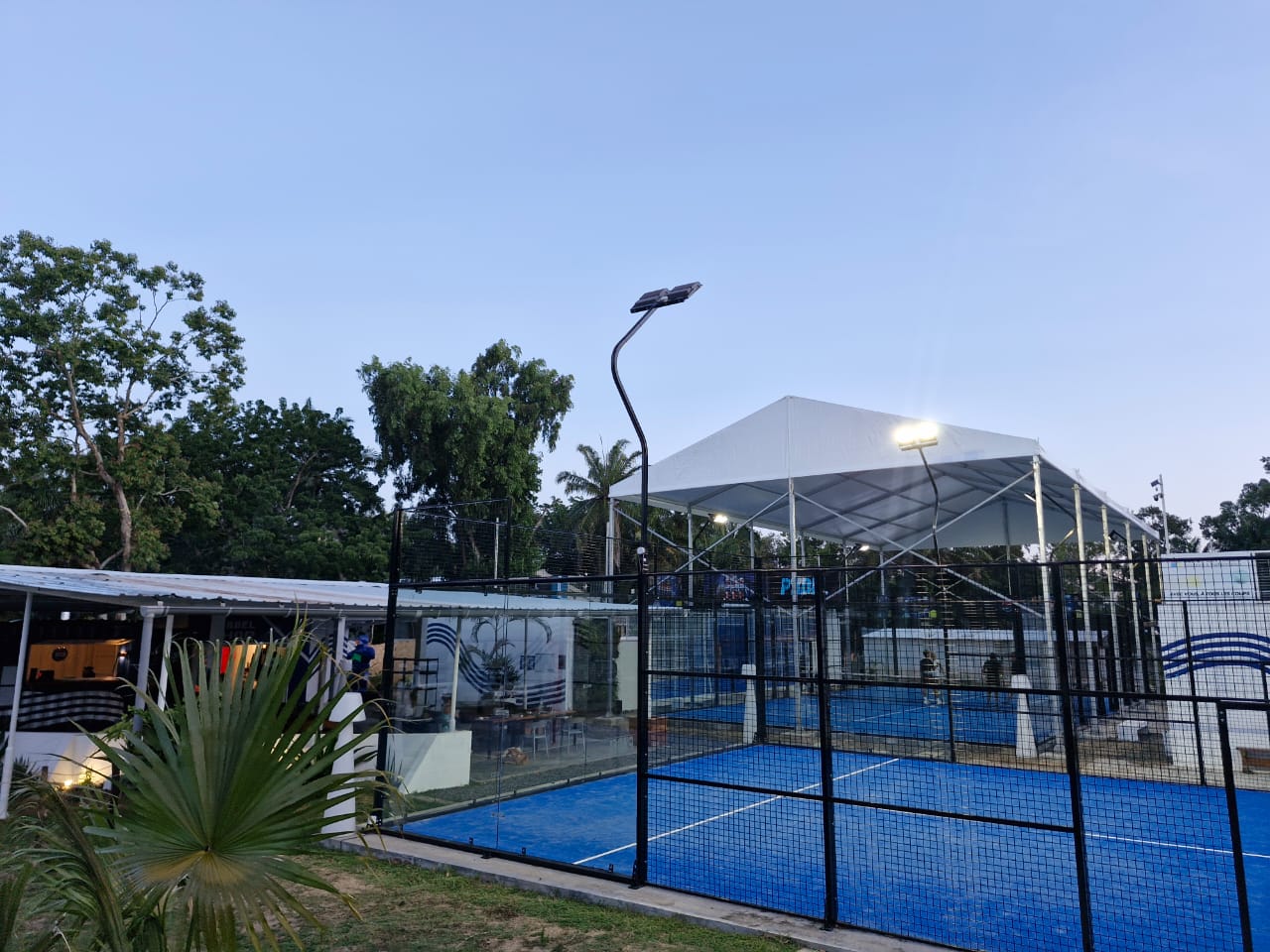
- Weather-Adaptive Design Mandatory: Germany’s long cold and rainy climate determines enclosed or retractable-roof padel courts are essential near all stadiums to achieve year-round stable revenue.
How to Maximize Profit When Running a Stadium-Adjacent Padel Club
- Cooperate with football clubs and fan organizations to launch fan exclusive padel tournaments, member discount packages and pre-match group activity bookings.
- Develop corporate stadium event bundled packages: combine padel experiences with football match tickets to attract enterprise group reservations.
- Host DPV regional padel leagues and amateur tournaments, relying on stadium regional traffic to enhance venue brand credibility.
- Equip complete catering, lounge and changing facilities to extend customer staying time and increase secondary consumption revenue.
Conclusion
North Rhine-Westphalia’s Dortmund, Gelsenkirchen and Cologne stadium zones are the most cost-effective choices for new padel investors in Germany; Munich Allianz Arena and Frankfurt stadium surrounding areas fit high-end premium padel projects; Hamburg, Berlin and Stuttgart stadium peripheral sports parks are ideal for investors seeking blue-ocean undersaturated markets.
By leveraging stable stadium passenger flow, mature transportation and commercial supporting conditions, matching local audience consumption levels with all-weather padel facilities and diversified event operations, your padel club can quickly build customer loyalty, achieve high occupancy and gain sustainable competitive advantages in Germany’s booming padel industry.