Common Main Construction Materials for Padel Courts Built in Germany
Germany’s cold, rainy climate, strict DIN safety codes, DPV (German Padel Federation) and FIP international standards define which materials are widely adopted for commercial padel courts nationwide.
Unlike southern European low-cost constructions, German padel facilities prioritize frost resistance, anti-corrosion performance, high safety ratings and year-round durability to withstand harsh winters, frequent rainfall and long-term intensive commercial use.
This guide breaks down the mainstream primary structural, enclosure, ground and auxiliary materials used for indoor and outdoor padel courts across Munich, NRW, Hamburg, Berlin and other German regions, including mandatory certification requirements, standard technical parameters, material advantages and compliance tips for customs, planning approval and official tournament qualification.
1. Main Load-Bearing Structure: Hot-Dip Galvanized S355JR Steel Frame (Most Popular Core Material)
Hot-dip galvanized steel is the universal mainstream structural material for nearly all German commercial padel courts, replacing ordinary painted steel due to Germany’s high humidity, acid rain and long cold seasons.
Standard German Specification Requirements
- Steel Grade: S355JR high-strength structural steel, compliant with Eurocode EN 1090 execution standard
- Main Post Size: 80×80×3mm thick square steel tube, side beams 60×40×2mm
- Anti-Corrosion Treatment: Full hot-dip galvanization per EN ISO 1461 (minimum 85μm zinc coating), then outdoor polyester powder coating
- Wind & Snow Load: Designed for German wind zone and snow load standards, suitable for northern low-temperature areas
Why It Is the Top Choice in Germany
- Perfect rust-proof performance to avoid frame corrosion after years of rain, snow and frost; service life reaches 25–30 years
- High structural rigidity, resists heavy ball impact and strong wind deformation, meets DPV safety inspection rules
- Modular prefabricated design shortens on-site construction time and easily passes German building control approval
- Indoor enclosed padel courts also adopt this steel frame to support insulated roof sandwich panels and retractable roof systems
Low-Budget Alternative: Pre-Galvanized Steel
Only used for small private backyard courts; not recommended for commercial clubs, as it cannot pass long-term public safety inspections in Germany.
2. Court Enclosure Wall: 12mm Clear Tempered Safety Glass (ESG) + Galvanized Steel Mesh
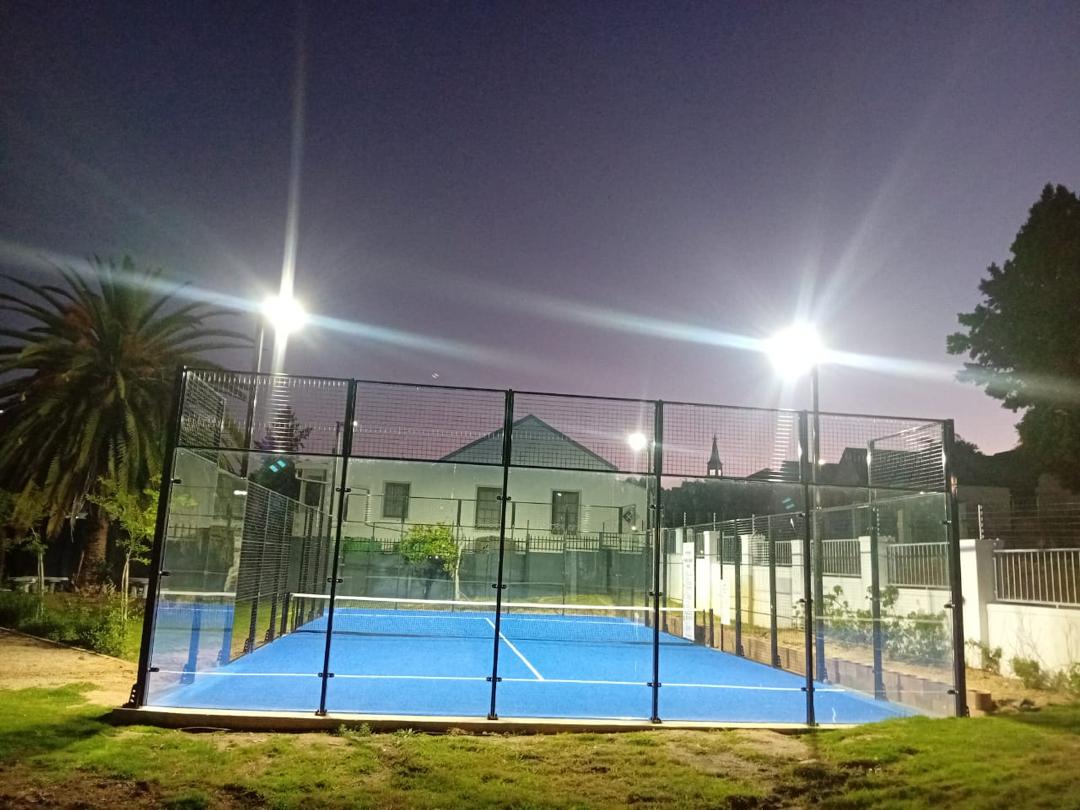
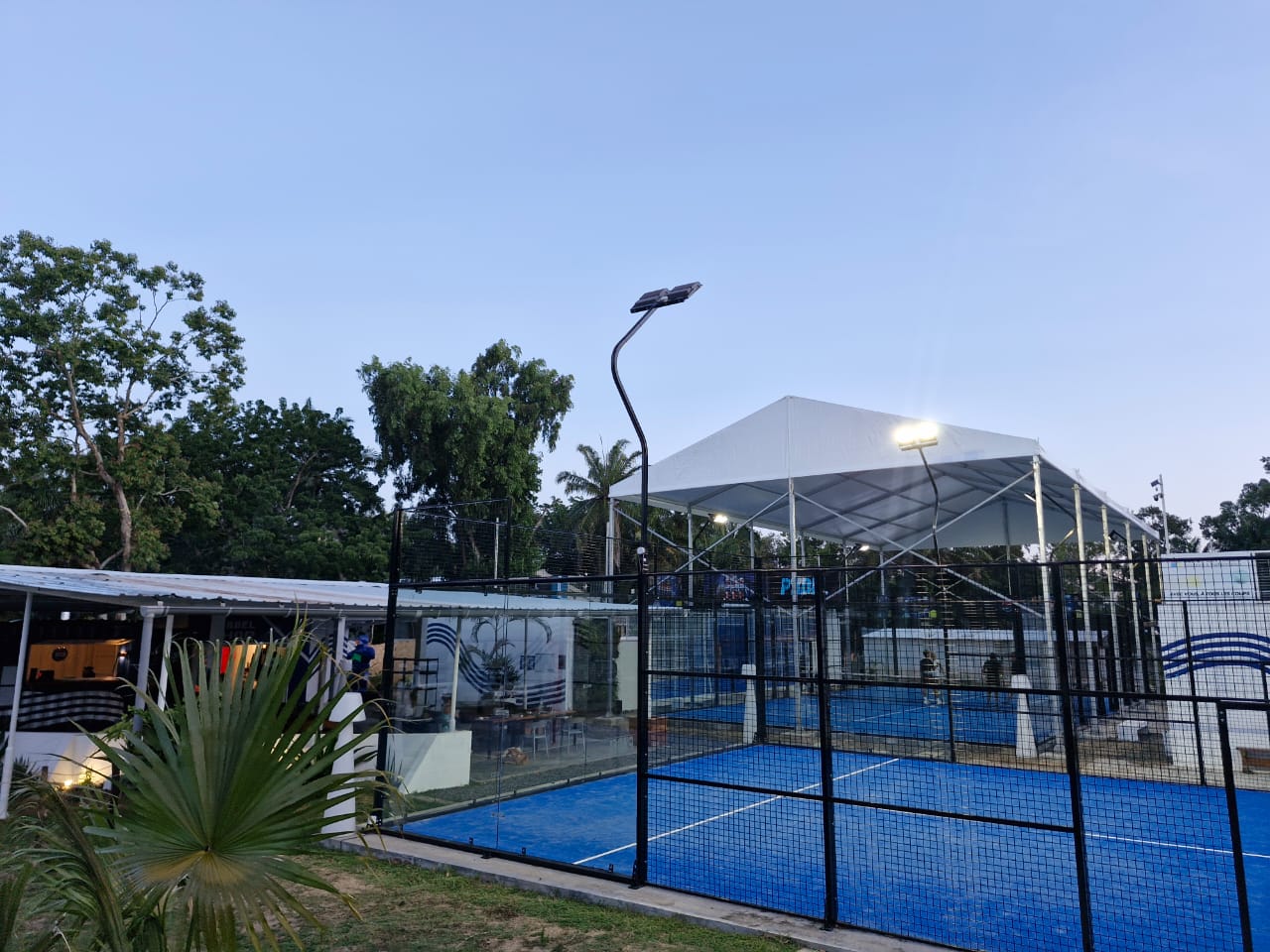
Nearly 95% of professional German padel clubs adopt the classic combination of 12mm tempered safety glass + upper 1m galvanized steel mesh, which is the mandatory standard required by DPV regional technical guidelines.
12mm Tempered Safety Glass
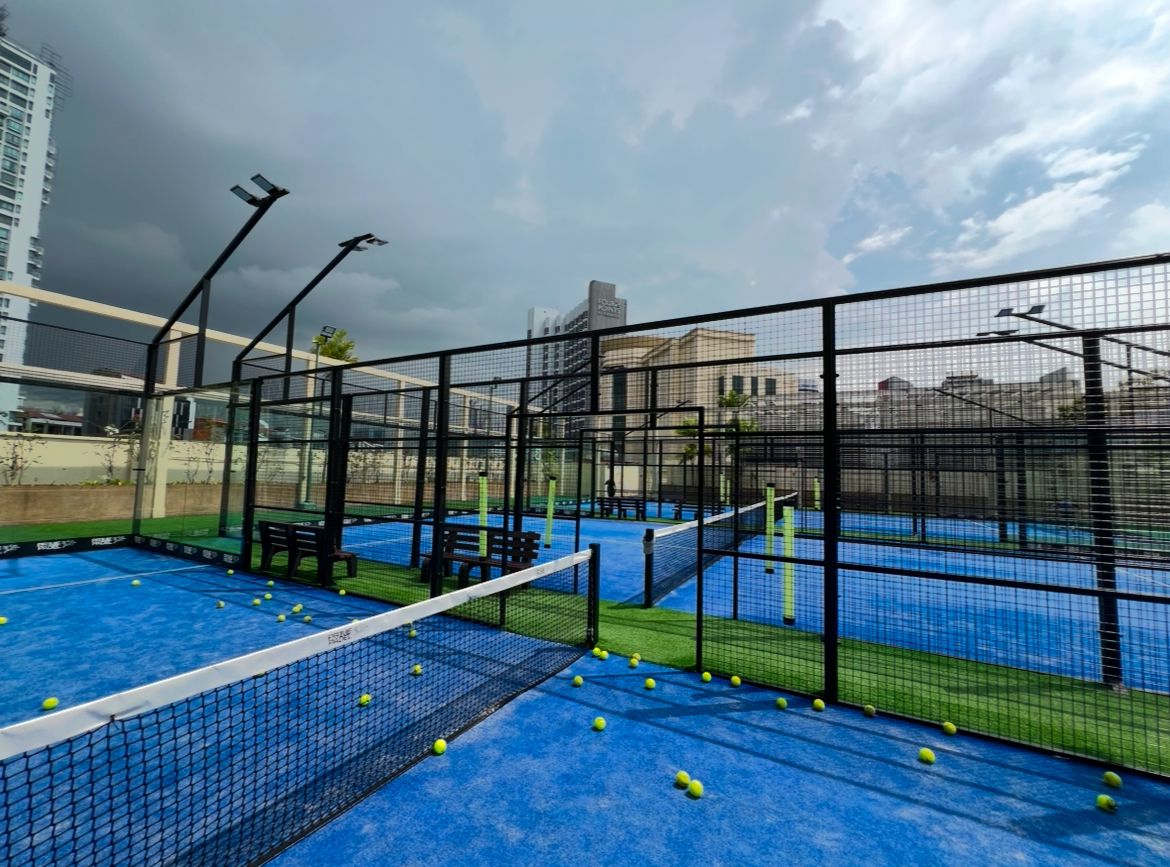
Glass & Mesh Enclosure
2.1 12mm Fully Tempered Safety Glass (ESG)
- Compliance Standard: EN 12150-1 DIN certified CE marked safety glass
- Polished smooth edge, pre-drilled installation holes to avoid stress cracking under temperature changes
- Safety feature: Shatters into small blunt granular fragments to prevent player cuts, mandatory for public commercial sports venues
- Panoramic full-glass back walls also use 12mm glass to ensure structural stability without intermediate support posts
2.2 Upper Welded Galvanized Steel Mesh
- Specification: 50×50mm square mesh, 4mm wire diameter, hot-dip galvanized + black powder coating
- Installed on the top 1m of the 4m-high enclosure wall, guarantees consistent ball rebound, ventilation and safety
- Prevents balls flying out of the court while maintaining a wide viewing experience for spectators
Why Germany Rejects 10mm Glass for Commercial Use
10mm tempered glass is only allowed for fully protected indoor courts; outdoor commercial padel facilities must use 12mm glass to resist strong wind vibration and hail impact, otherwise they cannot obtain local sports venue safety approval.
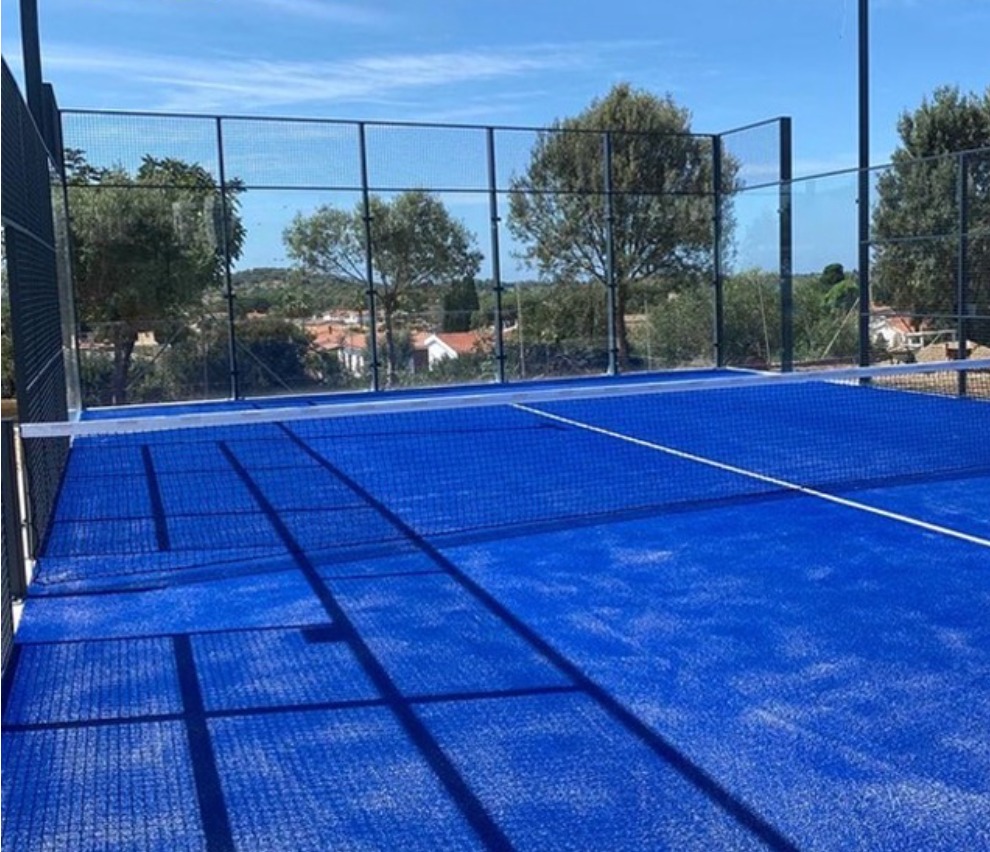
3. Playing Surface: Monofilament FIP-Certified Artificial Sports Turf
Artificial turf is the only mainstream playing surface material for German padel courts, complying with DIN 18035-7 and EN 15330 sports surface standards.
Padel Artificial Turf Structure
Standard German Padel Turf Parameters
- Fiber Type: UV-stabilized monofilament polyethylene yarn (anti-fading, anti-abrasion for long-term outdoor sunlight exposure)
- Pile Height: 18–22mm (20mm is the most widely adopted standard)
- Infill: High-purity round silica sand, ensures stable ball bounce, proper player traction and fast drainage
- Popular Approved Colors: Royal blue, bright green, terracotta (black is only permitted for fully indoor courts)
Core Advantages for German Climate
- High water permeability (≥20,000mm/h drainage capacity), no water accumulation after heavy rain
- Frost-resistant formula prevents fiber hardening and cracking under -20℃ winter temperatures
- Joint shock absorption reduces joint injury risks, compliant with German public sports safety requirements
- Top European brands including Polytan are widely chosen for professional competition-grade venues to host DPV regional leagues
4. Court Foundation: Frost-Resistant Reinforced Concrete or Porous Asphalt Base
Germany’s frost line ranges from 0.8m to 1.5m nationwide, making frost-proof rigid base construction a mandatory material standard that cannot be replaced by simple gravel ground.
Two Most Common Foundation Materials
- Reinforced Concrete Slab (Most Popular for Commercial Clubs) Thickness: 150–250mm reinforced concrete, laid on 200–300mm graded gravel frost protection sub-base Flatness tolerance: Max 3mm deviation over every 3m length, strictly required for consistent turf laying and stable glass installation Advantages: Long service life, no ground settlement, suitable for high-frequency commercial operation
- Porous Asphalt Base (Mainly for Outdoor Public Sports Parks) Excellent natural drainage performance, reduces flood risk approval difficulty in rainy regions Slightly lower cost than reinforced concrete, widely used in NRW public sports park padel projects
Forbidden Base Material: Ordinary Compacted Soil
Unreinforced soil ground will frost heave in German winters, causing turf deformation and glass frame tilt, leading to planning permission rejection.
5. Indoor Enclosed & Retractable Roof Main Materials
Over 70% of new German padel projects build fully enclosed or retractable roof courts to achieve year-round operation, with two mainstream roof materials:
5.1 Insulated PU Sandwich Panels (Full Indoor Enclosed Courts)
- 50–100mm thick thermal insulated sandwich panels with galvanized steel outer sheets
- Excellent heat preservation performance, cuts winter heating energy consumption by over 40%, the mainstream choice for premium indoor padel complexes
- Wind and snow load certified per Eurocode, widely adopted in Munich, Frankfurt high-end commercial districts
5.2 Polycarbonate Transparent Roof Panels (Retractable / Semi-Open Courts)
- UV-resistant hollow polycarbonate sheets, high light transmittance, lightweight and impact-resistant
- Matches retractable galvanized steel roof frames, switches between open-air and fully sheltered modes, popular in NRW suburban padel clubs
6. Auxiliary Standard Supporting Materials
- IP65 Waterproof LED Anti-Glare Floodlights: Mandatory for night play, 500–1000lux brightness compliant with German light pollution regulations
- Rubber Shock-Absorbing Gaskets: Installed between steel frames and glass panels to buffer temperature expansion and vibration
- Stainless Steel Fasteners: All connecting bolts use 304 stainless steel to avoid rust failure in humid environments
Material Selection Tips for German Padel Investors
- Always prioritize materials with CE + DIN certification, uncertified products will be rejected in building control inspection and customs clearance
- Outdoor facilities must adopt full hot-dip galvanized steel instead of spray-painted steel to avoid 3–5 years of rust failure
- Select UV-stabilized artificial turf to prevent color fading under strong German summer sunlight
- Reserve frost-proof foundation construction costs; cutting corners on the base will trigger huge later maintenance losses
Conclusion
The mainstream main construction material combination for standard commercial padel courts in Germany is summarized as:
- Main Frame: Hot-dip galvanized S355JR steel (EN 1090 + ISO 1461 certified)
- Enclosure Wall: 12mm DIN EN 12150 tempered safety glass + hot-dip galvanized steel mesh
- Playing Surface: FIP/DIN certified UV-stable monofilament artificial turf with silica sand infill
- Foundation: Frost-protected reinforced concrete or porous asphalt rigid base
- Indoor Roof: Thermal insulated PU sandwich panels or UV-resistant polycarbonate sheets
- Only materials compliant with German national and DPV sports standards can guarantee smooth planning approval, safe long-term operation, official tournament hosting qualification and stable investment returns in Germany’s booming padel market.