

Australian Cities With the Large Padel Player Populations Introduction
Padel is Australia’s fast-growing social racquet sport, with more than 100,000 active players nationwide and over 180 courts operating across the country as of 2026. Demand far outpaces venue supply in most metro areas, making padel club development a high-potential investment for sports developers.
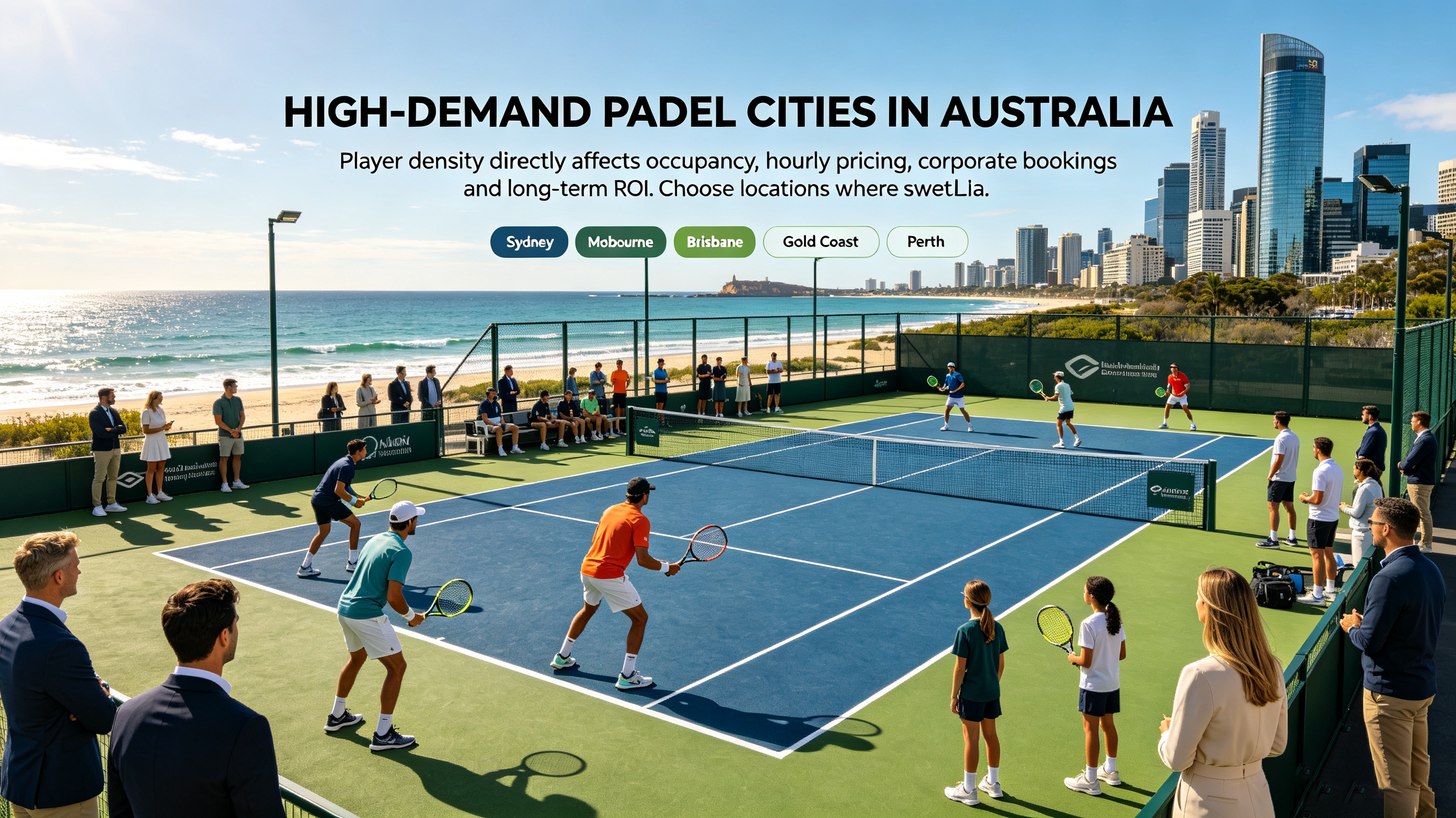
Player density directly determines venue occupancy, hourly pricing power, corporate booking volume and long-term ROI.
Not all Australian cities carry equal padel demand: capital hubs with dense professional populations, large Spanish/Latin American expat communities, strong tennis culture and year-round playable weather dominate participation rankings.
1. Sydney, New South Wales – Australia’s Padel Capital (Largest Total Player Base)
Sydney holds the biggest pool of regular padel players across Australia, with dozens of established clubs spanning inner-city industrial precincts, eastern suburbs, northern beaches and western residential zones.
Why Sydney Has Massive Padel Demand
- Large expat foundation: Thousands of Spanish, Argentine and Latin American professionals introduced padel locally, forming core competitive and social player groups that sustain weekly leagues and tournaments.
- Dense professional workforce: Inner suburbs like Alexandria, North Ryde and Macquarie Park host thousands of 25–45-year-old office workers seeking after-work social sports; corporate team-building padel bookings fill weekday off-peak slots year-round.
- National event hub: Sydney hosts the Australian Padel Tour’s flagship tournaments, drawing competitive players from every state and positioning local venues as official competition sites.
- Balanced indoor & outdoor play options: Mild coastal weather supports outdoor courts, while warehouse indoor venues eliminate rain disruptions for year-round bookings.
Key High-Demand Suburbs
Alexandria (Australia’s largest padel complex), North Ryde, Northern Beaches Cromer, Moore Park, South West Sydney BankstownPadel Aust...
Market Note
Sydney accounts for roughly 42% of Australia’s total padel facilities, yet new courts still fill booking calendars weeks in advance due to its huge population base and untapped western Sydney residential demand.
2. Melbourne, Victoria – Second-Largest Player Community & Strong Sports Culture
Melbourne ranks closely behind Sydney in active padel participants, fuelled by the city’s obsession with racquet sports, large expat groups and cold climate driving demand for premium indoor padel facilities.
Core Player Growth Drivers
- Elite tennis ecosystem: Home of the Australian Open, Melbourne’s residents already embrace racquet sports; tennis club members rapidly convert to padel memberships.
- Year-round indoor necessity: Cold, wet winters make fully enclosed heated padel courts non-negotiable, guaranteeing stable winter occupancy that outdoor-only venues in warmer cities cannot match.
- Established regional padel association: Victorian Padel Association runs regular social Americano tournaments, weekly leagues and junior academies, creating repeat player traffic across Docklands, Brighton and South East Melbourne venues.
Top Player Zones
Docklands waterfront, Richmond, Brighton beach suburbs, Reservoir northern suburbs, Southbank CBD fringe
Investment Edge
While Melbourne has a high number of existing clubs, outer western and south-eastern suburbs remain underserved with zero large-scale padel complexes, delivering low-competition blue-chip investment zones.
3. Brisbane & Gold Coast, Queensland – Fastest-Growing Player Populations
Queensland’s combined Brisbane-Gold Coast corridor is Australia’s fastest-expanding padel market, with player numbers doubling between 2024 and 2026 thanks to consistent warm weather, tourism and active outdoor lifestyle culture.
Brisbane CBD & Inner Suburbs
- Target players: Young professionals, university students and corporate event groups; inner-city padel venues capture post-work casual sessions and midweek corporate bookings.
- Climate advantage: Year-round outdoor playable weather cuts heating costs and enables extended operating hours with no seasonal downtime.
Gold Coast – Tourist + Local Dual Player Base
The Gold Coast delivers two steady player streams unavailable in southern capitals:
- Permanent local residents: Fitness-focused coastal families and young professionals joining weekly social padel groups.
- Domestic & international tourists: Resort visitors book casual padel sessions as part of holiday activity packages, filling daytime slow slots that city clubs struggle to monetise.
Many coastal resorts are adding padel courts as premium guest amenities, creating consistent cross-promotion opportunities for standalone padel clubs.
Market Status
Queensland’s padel market remains significantly less saturated than Sydney and Melbourne, with minimal competition in mid-coast areas like the Sunshine Coast, offering first-mover advantages for new investors.
4. Perth, Western Australia – Concentrated Loyal Local Player Base
Perth has a smaller total player pool than eastern capitals, yet boasts highly engaged, recurring padel participants clustered in central western suburbs such as Floreat and Bassendean.
Perth Demand Traits
- Tight-knit expat community: Western Australia’s Spanish and South American expats form dedicated padel social circles that run weekly leagues and regular club events.
- Limited venue competition: Only a handful of permanent padel clubs operate across the entire Perth metro area, meaning new facilities will capture nearly all local untapped demand without price wars.
- Year-round dry climate: Outdoor padel courts operate reliably 12 months annually, with minimal weather-related booking cancellations.
Best Investment Zones
Floreat, Bassendean, Scarborough coastal suburbs and CBD fringe industrial zones with ample land for multi-court complexes.
5. Underserved Emerging Cities (Growing Player Numbers, Low Competition)
These locations hold small but rapidly expanding padel communities with almost no established competition, ideal for investors seeking low-entry market saturation:
Adelaide, South Australia
Adelaide’s single main indoor padel hub operates at full capacity every week, proving unmet local demand. Middle-class residential suburbs and office districts supply a steady stream of beginner and social players, with zero large-scale multi-court padel complexes across the metro area as of 2026.
Canberra, ACT
Australia’s national capital hosts a small but high-spending player group of federal government professionals, diplomats and expats. One dedicated indoor padel venue already operates at maximum occupancy, with strong demand for corporate team-building and weekend social tournaments.
Sunshine Coast, Queensland
A fast-following coastal market behind the Gold Coast, with rising tourist and local family player numbers and zero competing padel centres in most suburban corridors.
Key factors That Create High Padel Player Density in Australian Cities
- Large Spanish/Latin American expat populations – the original core padel participant demographic nationwide
- Dense inner-city professional districts (25–45 age bracket, target corporate bookings)
- Mild or warm year-round climate supporting outdoor court play
- Existing mature tennis infrastructure for cross-member conversion
- High domestic tourism volume (Gold Coast, Sunshine Coast)
- Official state padel association support for leagues and tournaments
Final City Investment Ranking by Player Volume & Profit Potential
- Sydney (Highest total players, balanced corporate & social demand)
- Melbourne (Large loyal local player base, stable indoor winter revenue)
- Brisbane + Gold Coast Corridor (Fastest player growth, tourism supplementary income)
- Perth (Dedicated repeat players, low venue competition)
- Adelaide / Canberra / Sunshine Coast (Emerging blue-ocean markets with minimal rivals)
Conclusion
For Australian padel investors prioritising consistent high player turnout and maximum venue utilisation, Sydney and Melbourne deliver the largest existing active player populations. The Brisbane–Gold Coast corridor offers superior year-on-year player growth and tourism-driven supplementary revenue, while Perth, Adelaide and Canberra represent low-competition emerging markets with untapped local demand.
By matching your padel club scale, indoor/outdoor layout and supporting amenities (bar, function rooms, junior academies) to each city’s unique player demographics, you can guarantee strong recurring bookings and sustainable profitability within Australia’s booming padel industry.